Exploring the tranquil beauty of the new Norfolk coastal path
For the first time, individuals will have the right to access around the entirety of England’s open coast, encompassing not only the trail itself but also any relevant land forming part of the Coastal Margin. This initiative marks a significant step forward in providing public access to the country’s diverse coastal landscapes.
While some of the trail is still under development, the King Charles III England Coast Path is a masterpiece in the making. When completed, it will be the world’s longest shore walk, encircling the entire English seaboard: a remarkable 2,795 miles (4,500km) of beaches, clifftops, cities and nature reserves. From the southern tip of Cornwall to the uppermost reaches of Northumberland, it will link world-famous landmarks with little-known corners – a journey through unique cultures, geologies, history and more.
In the East, the trail beckons walkers to explore Hopton-on-Sea to Sea Palling, Sea Palling to Weybourne, and Hunstanton to Sutton Bridge.
The Norfolk Stretch
Stretching over 80 miles from Hopton on Sea to Hunstanton, the Norfolk Coastal Path unveils a tapestry of landscapes. Begin your journey at the vibrant cliffs of Hunstanton, where the rugged beauty of the Norfolk Coast truly comes alive. Follow the path as it winds through salt marshes, sand dunes, and pine woodlands, offering an ever-changing scenery that keeps you captivated at every step. Then pick up the new trail to continue your walk from Hunstanton, to Sutton Bridge, just over the border in Lincolnshire.
Of course, there is always the option to break up your walk with an overnight stay, and a lot of our properties offer short stays of 2 nights, and welcome dogs, so why not turn it in to a walking holiday over a few days or weeks. You can see our range of beautiful Norfolk properties here.
The path meanders through charming coastal villages, each with its own unique character. Stop in Burnham Market, with its quaint shops and traditional architecture, or visit the historic town of Wells-next-the-Sea, known for its colorful beach huts and bustling quayside. The hidden gems along the Norfolk Coastal Path provide a delightful peek into the region’s rich maritime history and local culture.
A birdwatcher’s Paradise – for the nature enthusiasts among us, the Norfolk Coast is a haven for birdwatching. The marshes and mudflats host a diverse array of bird species, including avocets, terns, and marsh harriers. Keep your binoculars handy as you traverse the path, and you may be rewarded with sightings of these graceful creatures against the backdrop of the coastal landscape.
Hopton on Sea to Sea Palling, Norfolk
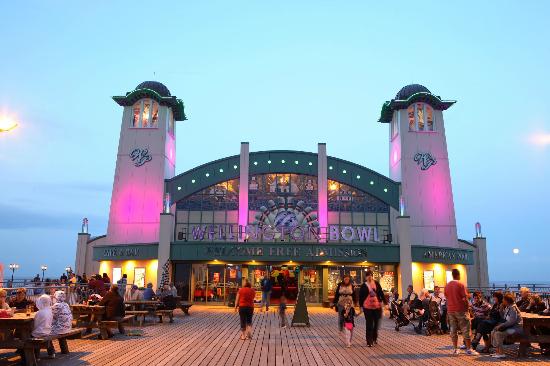
Embark on a captivating 21-mile coastal journey from Hopton on Sea to Sea Palling, where the Norfolk Coast Path unveils a rich tapestry of landscapes, vibrant towns, and maritime heritage. This stretch promises a delightful contrast, showcasing the dynamic blend of nature, entertainment, and history along the way.
Begin your adventure in Hopton on Sea, where the coast path sets the stage for a walk filled with surprises. Stroll through lively seaside towns, indulging in the entertainment and soaking in the maritime heritage that dots the coastline. As you navigate to Sea Palling, a new section of the path introduces walkers to a quieter, more serene side of the coastline, leading into the wildlife haven of Winterton-Horsey Dunes SSSI.
Experience the ever-changing atmosphere of the beaches, ranging from bustling summer shores in Hemsby to California, where deckchairs, ice-creams, and sandcastles create a lively scene. In contrast, autumn and winter offer a unique perspective, providing an opportunity to have this stretch of beach all to yourself—an intimate encounter with the raw beauty of Norfolk’s coast.
As the path leads to Great Yarmouth, the town unfolds in contrasts. From the Golden Mile’s energetic hub of entertainment to the working port, quays, and historic buildings, Great Yarmouth is a microcosm of the region’s diversity. Explore the busy market and visit museums that breathe life into Norfolk’s rich history.
Follow the path, which gracefully traces the line of a disused railway, eventually descending onto the beach at Caister-on-Sea. Pass by the lifeboat station, where the old lifeboat shed has been transformed into a museum, narrating tales of the station’s proud maritime heritage. History comes to life, offering a glimpse into the coastal life of yesteryears.
In every step, the Norfolk Coast Path from Hopton on Sea to Sea Palling unfolds as a journey through time, nature, and the maritime soul of England’s captivating coastline.


Sea Palling to Weybourne, Norfolk
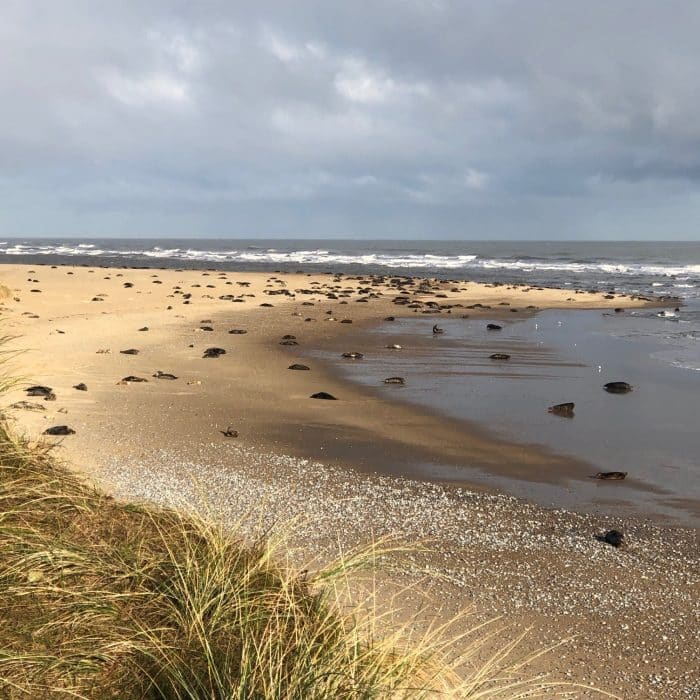
Embark on a coastal escapade spanning 23 miles (41km) from Sea Palling to Weybourne, where the Norfolk Coast Path unveils the sheer beauty of long sandy beaches, rich history, and delightful villages. This 800,000-year-old landscape is not only a feast for the eyes but also a journey through time, offering glimpses into ancient artifacts and the remarkable West Runton Elephant Fossil.
The coastal stretch from Sea Palling to Weybourne boasts pristine, long sandy beaches that invite you to bask in their serene beauty. As you stroll along the shore, history unfolds beneath your feet with the discovery of 800,000-year-old flint tools and the famous West Runton Elephant Fossil. Immerse yourself in the ancient tales that echo through the sands and cliffs, creating a unique blend of natural wonder and historical intrigue.
No visit to this region is complete without indulging in the culinary delights it has to offer. Along the way, make sure to savor the renowned Cromer crab. Known for its exceptional taste and freshness, this local delicacy is a treat for seafood enthusiasts. Whether enjoyed at a seaside cafe or as part of a picnic on the beach, the flavors of Cromer crab are a true embodiment of Norfolk’s coastal culinary scene.
In every step from Sea Palling to Weybourne, the Norfolk Coast Path invites you to immerse yourself in the harmony of nature, history, and local charm. Whether you’re drawn to the allure of sandy shores, intrigued by ancient artifacts, or enticed by the flavors of Cromer crab, this coastal stretch promises an unforgettable journey through the heart of Norfolk’s coastal treasures.
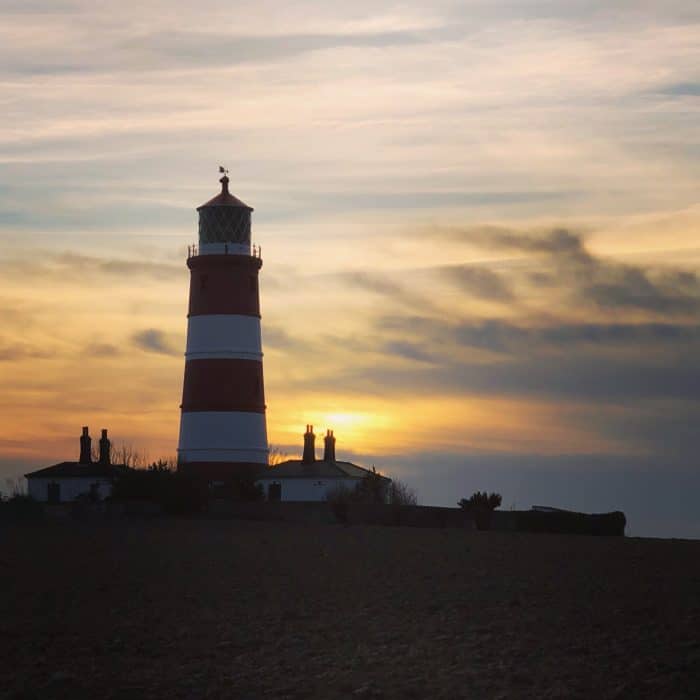
Weybourne to Hunstanton – this stretch is not officially approved at the time of writing this, but is ecxpected to “offically” open very soon.

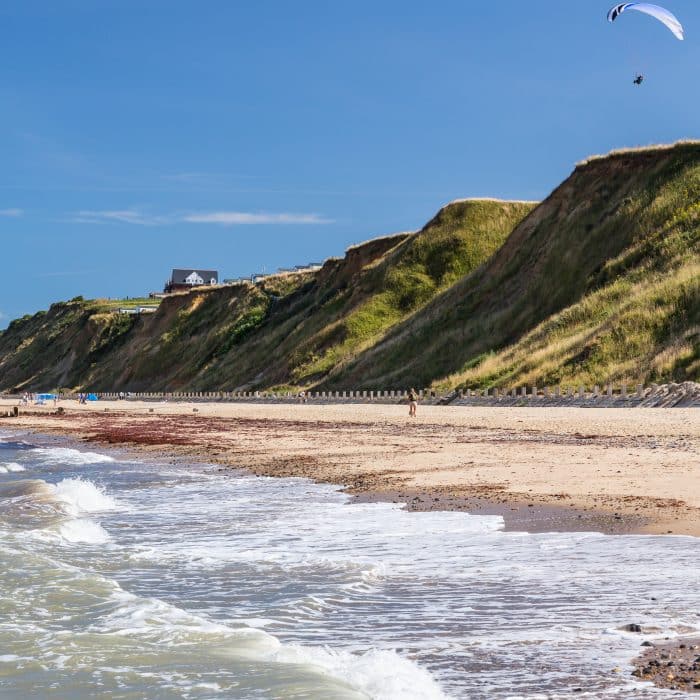
Hunstanton to Sutton Bridge
A new section of the King Charles III England Coast Path opened on the 6th March 2023, offering the public access to some of the country’s coastline for the first time.
The opening of the 33.6 miles (54.1km) section from Hunstanton to Sutton Bridge means the entire Norfolk coast is now accessible to walkers. This section introduces seven miles of new access between Snettisham and Lynn, crossing the seaward edge of Sandringham Estate.
This coastal stretch not only showcases sandy beaches and stunning sunsets but also unveils a tapestry of wildlife, conservation efforts, and remote landscapes that immerse you in the beauty of nature.
Between Heacham and Snettisham, the path leads you through the Wild Ken Hill estate—a beacon of rewilding, regenerative farming, and traditional conservation practices. This area, featured on BBC’s Springwatch, not only showcases nature’s resilience but also highlights the importance of sustainable coexistence between humans and the environment.
As a migratory superhighway during autumn and winter, the route takes you to the RSPB Snettisham Reserve. Here, witness the awe-inspiring ‘whirling wader spectacular’ as thousands of birds, including knot, dunlin, and oystercatchers, take flight with the rising tide, creating mesmerizing murmurations against the coastal backdrop.
Experience the enchantment of up to 40,000 pink-footed geese gathering in The Wash over winter. Their distinctive calls and V-shaped formations create an unmissable spectacle as they soar across the sky at first light. The shoreline between Snettisham and Sutton Bridge, predominantly alongside sea banks, adds a touch of remoteness. Grazed by cattle, these areas provide a unique sense of isolation, allowing you to connect with the diverse species that call this landscape home.
Between the hubs of King’s Lynn and Sutton Bridge, the path follows the Peter Scott Walk along the sea bank. Previously owned by Sir Peter Scott, the lighthouse at the mouth of the River Nene stands as a testament to the area’s rich history. Despite the remote stretches with no public facilities, the path offers a perfect opportunity to experience splendid isolation, surrounded by the myriad species, both big and small, that thrive within this coastal haven.
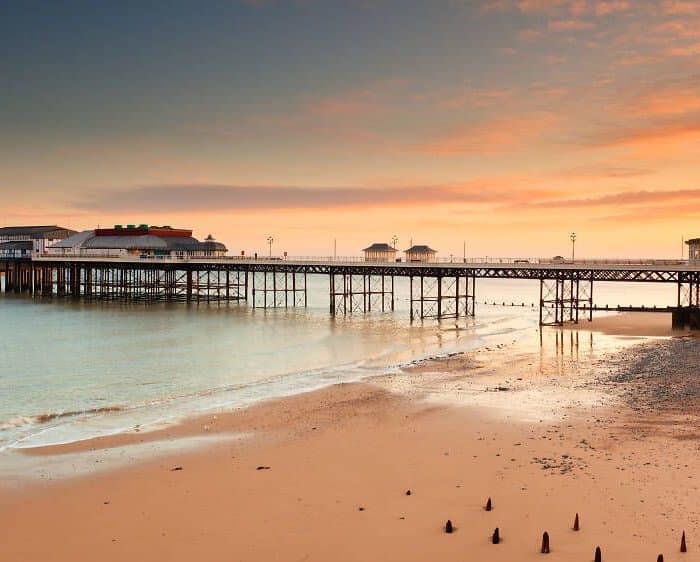
Taking in some of the coastal highlights of Norfolk, this section starts beside the sandy beaches at the 19th-century seaside resort of Hunstanton. Here, you will find fish and chip shops, arcades, and a fairground.
Further along, Old Hunstanton Beach is backed by dunes and, at low tide, the sands appear to go on forever. There are raspberry-ripple sunsets from here, with views across The Wash – the broad estuary and rectangular bay that lies between Lincolnshire and Norfolk. It is England’s largest natural bay and home to several nature reserves.